Who Invented the Posted Wait Time?
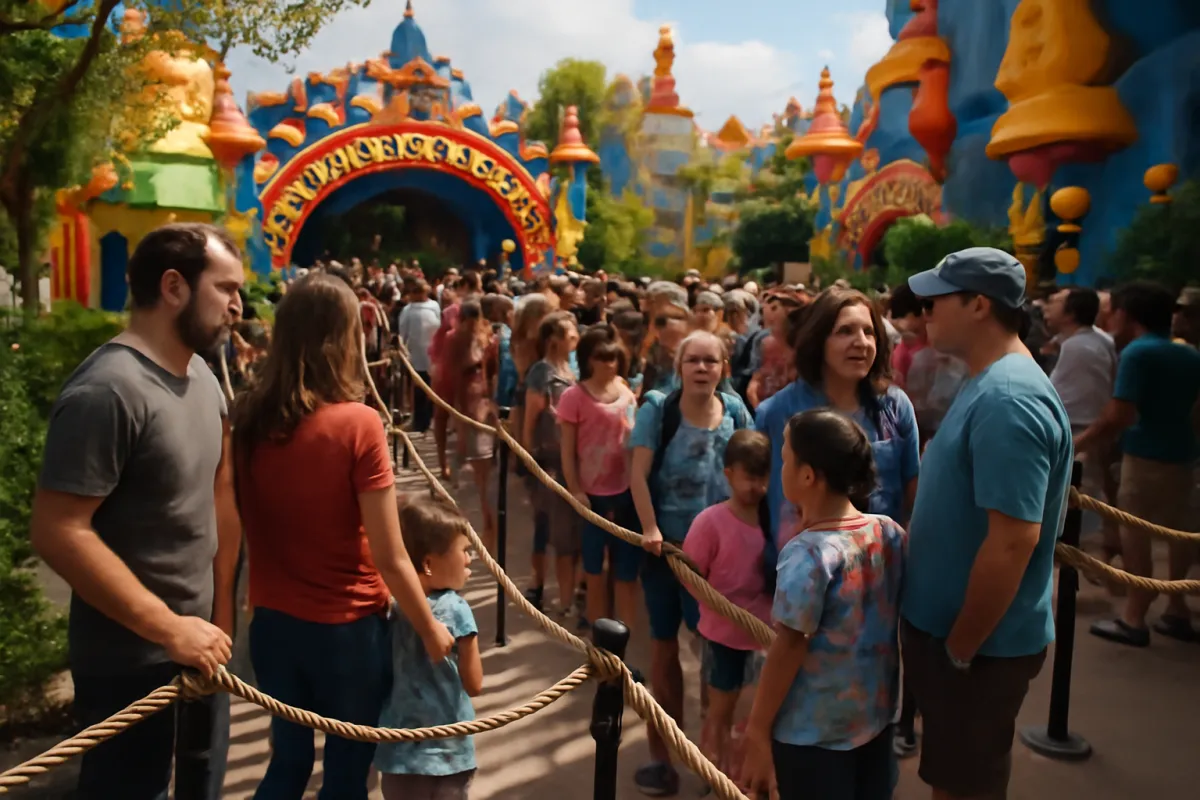
For 26 years, the number on a Disney wait-time sign could trace back to a small red card on a lanyard, handed to a random guest at the entrance of a ride. Disney only finished retiring that system — called FLIK — in 2026.
That single detail says a lot about how recent "accurate" wait times actually are. Before algorithms and RFID, the posted number in front of you was, quite literally, someone's best guess backed by a stopwatch and a card.
FLIK: the Fabulous Line Information Keeper
FLIK stood for "Fabulous Line Information Keeper." It debuted in 1999 as one of the first OpSheet enhancements at Walt Disney World, later expanding to Disneyland. The mechanics were simple: cast members handed small red cards to randomly selected guests entering a queue. Those guests carried the card through the line and returned it at the attraction's exit or boarding area. Disney used the elapsed time to calibrate the wait estimate posted at the entrance (Disney Tourist Blog).
Automated technology — MagicBands, RFID readers, and other sensor-based tracking — quietly replaced FLIK at most attractions more than a decade ago. But pockets of the manual system lingered far longer than most guests realized. According to a LinkedIn post from Jonathan Reuel, an OpSheet Ecosystems product director at Walt Disney World, the very last FLIK location was Goofy's Sky School at Disney California Adventure, converted to modern tracking in 2026 — closing out a run that started in 1999 (Disney Fanatic).
That means a guest at Goofy's Sky School in early 2026 could, in theory, have been handed a red card that hadn't changed in concept since the Clinton administration.
The other 1999 system: FastPass
FLIK measured lines. A separate system, launched the same year, tried to shrink them. Disney's original FastPass debuted in 1999 as a paper-based virtual queue: guests inserted a park ticket into a kiosk near an attraction and received a paper slip with a printed return window, during which they could come back and use a shorter line (Disney Dining).
FastPass evolved in stages over the following two decades:
| System | Era | Format |
|---|---|---|
| FastPass | 1999–2013 | Paper slips from kiosks near each attraction |
| FastPass+ | 2013–2021 | Digital reservations via the My Disney Experience app, selected in advance |
| Genie+ | 2021–2022 | Paid, app-based, day-of reservations |
| Lightning Lane (Multi Pass / Single Pass) | Current | Paid, tiered, per-attraction or park-wide passes |
Disney discontinued FastPass+ in August 2021 and replaced it with the paid Genie+ service, marking the shift from a free line-skipping perk to a purchased one (Disney Dining). That paid model has continued to expand: see how Lightning Lane pricing has changed in 2026 and whether it's worth buying at all.
Why the posted number was never exact
Two systems ran in parallel for decades: one manually measuring actual wait (FLIK), and one trying to sell you a way around it (FastPass and its successors). Neither one was built to give you a precise, real-time number before you got in line — FLIK sampled occasionally, and posted signs were updated by cast members working from that sampled data, not a live feed.
That gap between "posted" and "actual" is still the reason a good touring plan needs more than the sign at the entrance. It's also why live and typical wait time data — tracked continuously throughout the day — replaced hand-carried red cards as the more reliable signal.
What replaced the red card
Modern wait tracking runs on continuously tracked data rather than spot samples. Instead of one guest's card measuring one lap through one line, systems like Park Autopilot track wait times continuously across every attraction, which is how patterns like rope drop's actual value or the biggest hourly swings on a ride can be measured with real numbers instead of a hand-carried estimate.
The irony is that the destination — a number you can trust before you commit to a line — is the same goal FLIK had in 1999. The method just finally caught up.
Sources
- Disney Fanatic — End of an Era: Disney Eliminates 26-Year Wait Time Feature
- Disney Tourist Blog — Disney World Ends FLIK Wait Times Estimate Tool
- Disney Dining — The Evolution of Disney FastPass, FastPass+, Genie+, and Lightning Lane
Ready to put this into practice? Park Autopilot creates your touring plan from real-time wait times. Try it free →
Ready to put this into practice?
Park Autopilot takes everything in this guide and automates it. Just open the app on your park day, and it'll tell you exactly where to go next based on current wait times.
Try Park Autopilot NowRelated Articles

Hollywood Studios Without the Headliners: Echo Lake to Pixar Plaza
Star Tours averages 5.7 minutes and Toy Story Mania averages more than Tower of Terror. A guide to the four Hollywood Studios areas nobody plans around.

Discovery Island and Rafiki's Planet Watch: Animal Kingdom's Middle
A photo line on Discovery Island averages a longer wait than Kilimanjaro Safaris. Here is how to time Animal Kingdom's two most overlooked areas properly.

Liberty Square and Main Street: The Calmest Corner of Magic Kingdom
Nothing in Liberty Square or Main Street averages over 19 minutes. Here is how to use Magic Kingdom's quietest two lands as a recovery stop, hour by hour.